
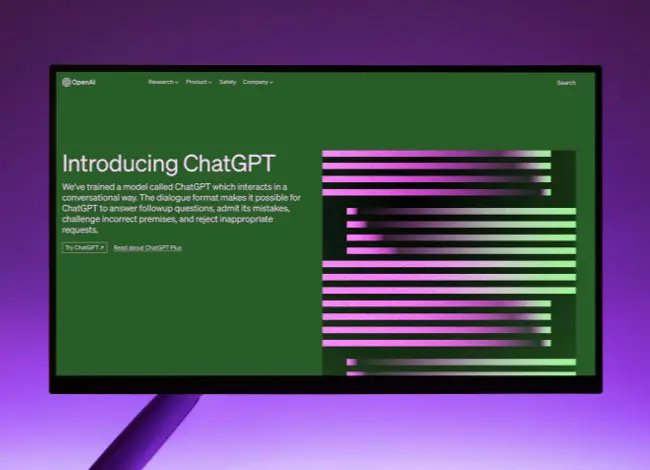
For decades, the search experience remained largely unchanged: you typed a keyword into a search engine, scanned a list of blue links, and clicked through several websites to piece together an answer. Today, that paradigm is being permanently dismantled by Large Language Models (LLMs) like ChatGPT.
At Amrita Infovision Private Limited, we see this shift not just as a change in how we “google” things, but as a fundamental evolution in how businesses and individuals extract value from the vast ocean of global data.
1. From “Keyword Matching” to “Contextual Understanding”
Traditional search engines are essentially sophisticated indexers; they find content that contains your keywords. AI models, however, understand intent.
The Difference: If you ask a search engine “how to secure a database,” it provides a list of articles. If you ask an AI model, it synthesizes a step-by-step security protocol tailored to your specific infrastructure (like Sage X3 or a custom cloud setup), explaining why certain configurations are safer than others.
The Impact: We have moved from “searching for information” to “conversing with knowledge.”
“We are witnessing the end of the 'link-clicking' era. The future of information retrieval isn't about finding a website that might have your answer; it’s about getting the answer synthesized, verified, and delivered in seconds.”

2. The Rise of Synthesis over Aggregation
The sheer volume of information on the internet is now too large for any human to synthesize manually. AI acts as a high-speed curator.
The Workflow: Whether you are researching a new tax regulation, comparing ERP software, or debugging a complex code snippet, AI can summarize thousands of pages of documentation into a coherent summary. This drastically reduces the time spent on “information gathering” and shifts it toward “decision-making.”
3. Democratizing Technical Expertise
Historically, finding specific technical solutions required years of training or access to expensive consultancy reports.
The Revolution: AI has flattened the learning curve. Junior developers can now troubleshoot complex logic, and business managers can query high-level strategy frameworks that were previously locked behind academic paywalls. This democratization is allowing firms like ours to provide more value to our clients, faster.
4. The “Human-in-the-Loop” Necessity
While AI is revolutionary, it is not infallible. It can hallucinate facts or miss the nuanced context of a specific business situation.
The New Skill: The most important skill for 2026 isn’t “knowing where to search”—it’s “knowing how to verify.” As AI becomes the primary source of information, the value of human critical thinking, verification, and professional oversight increases.
“AI can provide the answer, but only a human expert can provide the accountability. At Amrita Infovision, we use AI to accelerate our research and coding, but we apply human-in-the-loop validation to ensure that every solution we deliver is secure, compliant, and business-ready.”
Conclusion: Adapting to an AI-First World
The revolution in information retrieval is happening in real-time. For businesses, this means the speed of information gathering is no longer a competitive advantage—the speed of applying that information is.
At Amrita Infovision Private Limited, we are integrating these advanced AI models into our own internal workflows to build software faster and provide deeper, data-backed insights to our clients.
Is your business leveraging AI to accelerate your decision-making, or are you still relying on manual research? Contact our team today to learn how we can help you integrate AI-driven intelligence into your business processes.